
AI literacy training for the EU AI Act
Article 4 of the EU AI Act asks every organisation that uses AI to take measures for the AI literacy of its staff. This page explains in plain language what that means for organisations in the Netherlands, Belgium and Luxembourg, what the law does and does not require, and how to approach it in practice.
Applies across the EU · In English, Dutch or German · On-site in the Benelux or online
What Article 4 asks of you
AI literacy means the skills, knowledge and understanding to use AI systems in an informed way: knowing what they can do, where they go wrong and what risks they bring. Article 4 of the AI Act turns that into a duty for organisations. Since the amendment of July 2026, the duty is to take measures that support the AI literacy of your staff. You do not have to guarantee that every individual reaches a set level. You do have to act.
Who it applies to
Every provider and deployer of AI systems. In practice: every organisation that uses AI tools such as ChatGPT, Microsoft Copilot, Claude or Gemini at work, whatever its size or sector.
What it asks
That you take measures to support the AI literacy of your staff who work with AI systems. It is an obligation of effort: you have to act, not guarantee a result.
Where it applies
In every EU member state, including the Netherlands, Belgium and Luxembourg. What counts is where the AI is used, not where your company is headquartered.
From the original text to the Digital Omnibus
Article 4 has applied since 2 February 2025. In July 2026 the EU softened its wording as part of the Digital Omnibus on AI. The obligation did not disappear: it changed from ensuring a level to taking measures.
-
1 August 2024
The EU AI Act enters into force.
-
2 February 2025
Article 4 applies. Its original wording asked organisations to take measures to ensure, to their best extent, a sufficient level of AI literacy among their staff.
-
27 July 2026
The Digital Omnibus on AI, Regulation (EU) 2026/1744, enters into force. It replaces Article 4: organisations now have to take measures to support the development of their staff’s AI literacy. The text explicitly does not require them to guarantee any specific level for any individual.
What this means in practice. The rule still applies to every organisation that uses AI in the EU. Training your people is the most obvious measure, and a record of what you did is how you show that you took measures.
What the law does not prescribe
The AI Act leaves the form of the measures to you. That is useful, because a law firm, a hospital and a software company use AI in very different ways. It also means you have to make choices yourself and be able to explain them.
A sensible yardstick, taken from the original text of Article 4, is to consider people’s technical knowledge, experience, education and training, and the context in which the AI is used.
Article 4 does not require
- a specific course or provider
- a certificate or exam
- a minimum number of hours
- the same training for everyone
Assess, train, document
You do not need a large project to get this right. Three steps cover most organisations.
Map who uses AI, and how
List the AI systems in use, from chat assistants to AI features inside your existing software. Then look at roles: who uses which tool, for what, and with which data. A policy adviser drafting texts needs different knowledge from a recruiter screening CVs or a developer building with AI.
Train by role
Give everyone who uses AI a shared, practical foundation: what the tools can and cannot do, how to check output, which data stays out. Then go deeper where the use or the risk is greater. Take people’s existing knowledge, experience and working context into account.
Document what you did
Keep a record of who received which training, when and why, along with your internal AI guidelines. That record is how you show you took measures. Review it when tools, roles or the rules change.
How the Dutch Data Protection Authority frames it
In the Netherlands, the Dutch Data Protection Authority (Autoriteit Persoonsgegevens, AP) coordinates supervision of algorithms and AI. In 2025 it published guidance on getting started with AI literacy. Its message: treat AI literacy as an ongoing effort rather than a one-off course. Identify which AI systems are used and by whom, set goals per group, carry out the measures, and evaluate and adjust them over time.
That guidance was written for the original wording of Article 4. The structure still works well under the amended text, and it is a useful reference in Belgium and Luxembourg too, where the same EU rule applies.
From a shared foundation to compliance
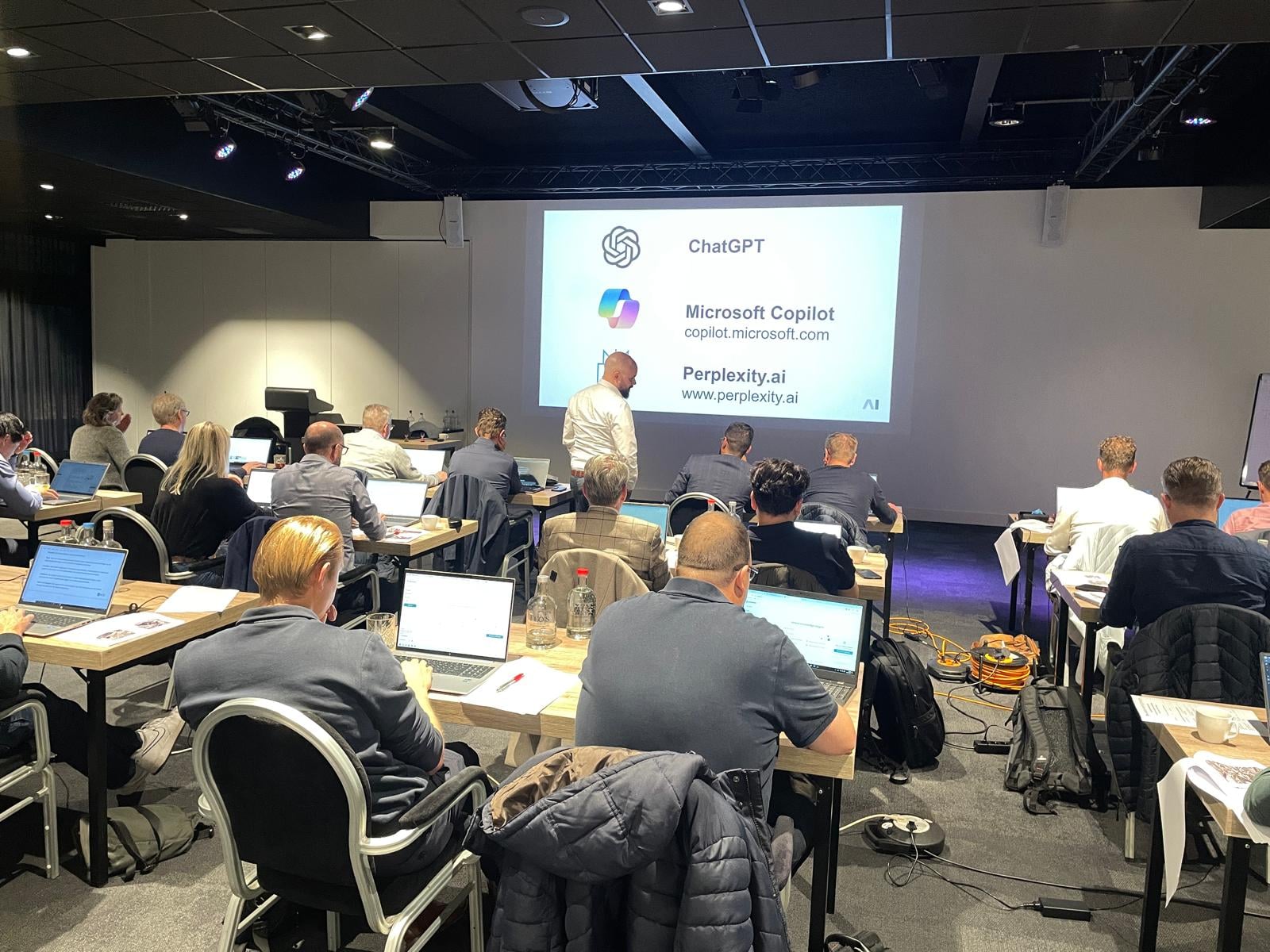
We deliver practical AI training in-house at your organisation anywhere in the Netherlands, Belgium and Luxembourg, or online. Most organisations start with our AI literacy training for everyone who uses AI. Participants practise on their own tasks, learn to check output and to keep sensitive data out of the tools. Every participant receives the Awareness Badge, and you receive a short evaluation summary that you can add to your records.

AI literacy training (EU AI Act): hands-on basics
AI literacy training for your whole team, in line with Article 4 of the EU AI Act. Hands-on, safe and directly usable. In-house in the Benelux or online.
More information
EU AI Act compliance consulting
EU AI Act compliance consulting for organisations in the Benelux: gap analysis, compliance roadmap, audit-proof documentation and incident response plans.
More information
AI for executives and leadership teams
AI session for executives and leadership teams in the Benelux: a realistic view of AI for your organisation and a prioritised shortlist of opportunities.
More informationIndependent certification
Want evidence beyond attendance? Participants can take an exam for the accredited certificate of the Foundation for the Promotion of AI Literacy.
More about certificationInternational and multilingual teams
Training in English, Dutch or German, including mixed Dutch and English groups.
AI training for international teamsAI literacy in the context of your profession
AI literacy depends on context. These courses build the same foundation around the tasks, rules and confidentiality requirements of a specific sector.

AI training for lawyers in the Netherlands and Belgium
AI training for lawyers: use ChatGPT and Copilot safely for legal research, pleadings and client communication. In-house across the Benelux or online.
More information

AI training for tax advisers and accountants
AI training for tax and finance professionals in the Benelux: ChatGPT and Copilot for research, advice memos and client communication. In-house or online.
More information

AI training for HR professionals (GDPR & EU AI Act)
AI for HR teams in the Benelux: use ChatGPT and Copilot safely for recruitment, performance reviews and employee communication, with GDPR in mind.
More information
ChatGPT and AI training for healthcare professionals
Use ChatGPT and Copilot safely for records, patient communication and research, within medical confidentiality and GDPR. Hands-on, across the Benelux.
More information

AI training for policy makers and the public sector
AI for policy makers: use ChatGPT and Copilot responsibly in policy work, within the EU AI Act and GDPR. In-house across the Benelux or online.
More information
ChatGPT and AI training for civil-law notaries
AI training for notaries in the Netherlands and Belgium: use ChatGPT and Copilot safely for deeds, case files and client communication. In-house or online.
More informationQuestions about AI literacy and the EU AI Act
Is AI literacy training mandatory under the EU AI Act?
Not a specific training. Article 4 obliges organisations that provide or use AI systems to take measures to support the AI literacy of their staff. The law does not say which measures. Training is the most obvious one, and the easiest to document.
What changed with the Digital Omnibus in July 2026?
Until 26 July 2026, Article 4 asked organisations to ensure, to their best extent, a sufficient level of AI literacy among their staff. Since 27 July 2026, Regulation (EU) 2026/1744 asks them to take measures to support the development of that literacy, and states explicitly that they do not have to guarantee a specific level for any individual. The duty to act remains.
Does Article 4 apply to us if we only use ChatGPT or Copilot?
Yes. If your staff use AI systems at work, your organisation is a deployer under the AI Act. Article 4 applies to providers and deployers alike, regardless of the risk category of the system.
We are a non-EU company with an office in Amsterdam, Brussels or Luxembourg. Does it apply?
If AI systems are used in your EU operations, the regulation applies there. The nationality of your company or group does not change that. The same rules apply in the Netherlands, Belgium, Luxembourg and every other member state.
How do we show that we have taken measures?
Keep records: which roles use AI, which training each group received and when, and which internal guidelines apply. An attendance record, training materials and an evaluation summary help. Independent certification, for example through our certification route, is an extra option, not a legal requirement.
Can the training be delivered in English?
Yes. Our AI literacy training is available in English, Dutch or German, and mixed Dutch and English groups work fine. See also AI training for international teams.
Is this legal advice?
No. This page explains the rule in plain language. For questions about your specific situation, such as risk classification or other obligations under the AI Act, see our EU AI Act compliance consulting.
Explore further
AI literacy certification
Have your knowledge assessed independently at Basic, Practitioner or Advanced level.
ViewAI policy consulting
Set down clear internal rules for AI use, alongside the training.
ViewAI training for international teams
Training in English or mixed groups, on-site across the Benelux or online.
ViewReady to take measures that hold up?
Tell us who uses AI in your organisation and how. We will propose a training plan by role, in the language your teams work in.
Prefer email? info@adviesentraining.ai