
ChatGPT and AI training for healthcare professionals
Use ChatGPT and Copilot safely for records, patient communication and research, within medical confidentiality and GDPR. Hands-on, across the Benelux.
- Format
- Half day (4 hours) or Full day (8 hours)
- Level
- Foundation to advanced
- Audience
- Doctors, nurses and other healthcare professionals
- Location
- In-house or online
- Language
- English (Dutch on request)
Trusted by, among others






Learn to use ChatGPT and Microsoft Copilot safely in healthcare: for medical documentation, patient communication, clinical research and administration. Hands-on, in-house or online, no technical background needed. This is our Advanced training, tailored to healthcare.
Your trainers: Tim Goudriaan and/or Diederik Stolk. We have experience with AI training in healthcare, from hospitals to mental health services.
ChatGPT and Copilot in healthcare practice
You work with real cases from your own practice. That way you learn not only what ChatGPT and Copilot can do, but also how to use them safely and sensibly in your daily work. AI takes over routine work, so you keep more time for the patient.
By default we work with ChatGPT and Microsoft Copilot. On request we also look at other models, such as Claude, Gemini or Perplexity. That way the training fits the systems your organisation uses.
Don’t expect a theoretical lecture. This is a practical day where you do the work yourself.
Working safely within medical confidentiality
In healthcare, confidentiality counts twice. Under GDPR, health data is a special category of personal data, and it is covered by medical confidentiality. We show you which information you can and cannot enter in an AI tool, and how to work without patient data leaking out. In a public tool, your input can end up on servers outside the EU. AI also sounds convincing and still makes mistakes, so you always check the result yourself. We also agree clearly on who may do what. Since 2025 the EU AI Act has set AI literacy requirements across the EU; for broader compliance, our EU AI Act compliance consulting can help.
Want to introduce AI more broadly than training alone? See our AI consulting for organisations.
Part of the learning path
All our programmes can be taken on their own or as a learning path. This advanced training builds on the foundation of AI literacy. Work in a pharmacy? Then the AI training for pharmacists is a better fit. Want to embed AI structurally in your team’s work? See our AI Way of Working.
Practical matters for healthcare professionals
The training is for doctors, nurses and other healthcare professionals, from newcomers to experienced practitioners, in the Netherlands, Belgium and Luxembourg. No technical background is needed. We do ask you to create a ChatGPT account before or during the training. Our programmes may qualify for CPD or accreditation points; get in touch and we will gladly help you look into it.
Further reading
What you will learn
- You apply ChatGPT and Microsoft Copilot safely to healthcare tasks, always checking for accuracy.
- You write effective, reusable prompts with our five-step model.
- You know which information can and cannot go into an AI tool, with medical confidentiality and GDPR in mind.
- You use AI for medical documentation, patient communication, clinical research and administration.
- You understand what the EU AI Act means for AI literacy in your organisation.
How the training is structured
Half day (4 hours) or full day (8 hours), in-house or online. The times below are indicative and scale with the chosen format.
-
Introduction and AI basics
30 minWhat can generative AI do, and what can't it?
- How ChatGPT and Copilot work
- Where AI is strong and where it is not
- Starting safely within medical confidentiality
-
Effective prompting
45 minThe five-step model in practice
- Persona, Task, Context, Criteria, Output
- Reusable prompts for recurring work
- Assessing output critically for accuracy
-
Documentation and communication
60 minReports, letters and plain language
- Drafting reports faster
- Turning medical information into plain language
- Cleaning up standard texts and forms
-
Research and record-keeping
60 minExploring literature and structuring notes
- Searching guidelines and literature faster
- Summarising and organising long texts
- Checking sources and findings for accuracy
-
Privacy and responsible use
45 minGDPR, medical confidentiality and governance
- Which information you do and don't enter
- Working without patient data leaking out
- EU AI Act and AI literacy
-
Applying it to your own work
60 minWorking on your own cases
- Working out your own use cases
- Building a personal prompt set
- Next steps for your team or department
Where AI helps
Medical documentation
Draft and check reports, letters and records faster.
Patient and client communication
Turn complex medical information into clear, understandable language.
Clinical research
Explore literature and guidelines faster, always with a check for accuracy.
Administration and record-keeping
Standardise forms and summarise loose notes, with a check before anything goes into the patient record.
Multilingual patient information
Translate and simplify information and instructions for patients who speak another language or have low literacy.
Training tailored to your organisation
We are happy to build a programme that fits your practice, team and learning goals. Fill in the form and we will schedule an introductory call within one working day.
-
Fully tailored
Content and examples matched to your sector, team and way of working.
-
At your offices or online
4 or 8 hours, groups of up to 20 participants, in English or Dutch. Anywhere in the Benelux.
-
Proof of attendance
Attendance is registered; for legal training, CPD points may be possible.
Our method: the five-step prompting model
In every training you work with our five-step model. It helps you write prompts that are reliable, repeatable and directly usable in your own work.
- P
Persona
What role and tone do you give the AI?
- T
Task
What task? Concrete and clearly scoped.
- C
Context
What background and sources are relevant?
- C
Criteria
What must the result meet?
- O
Output
In what form do you want the answer back?
What you receive
After this training: badge and certificate
You complete this training with the Awareness Badge. Want your AI literacy formally and independently recognised as well? Then you take an exam for the accredited certificate of the Stichting ter bevordering van AI-Geletterdheid (Foundation for the Promotion of AI Literacy).
- Awareness Badge included
- Prepares for SAIG-Practitioner
Awareness Badge
Every participant receives the digital Awareness Badge afterwards. No exam needed.
Official certificate
Have your knowledge tested at Basic, Practitioner or Advanced level. Administered independently on the assessment platform of the Stichting ter bevordering van AI-Geletterdheid.
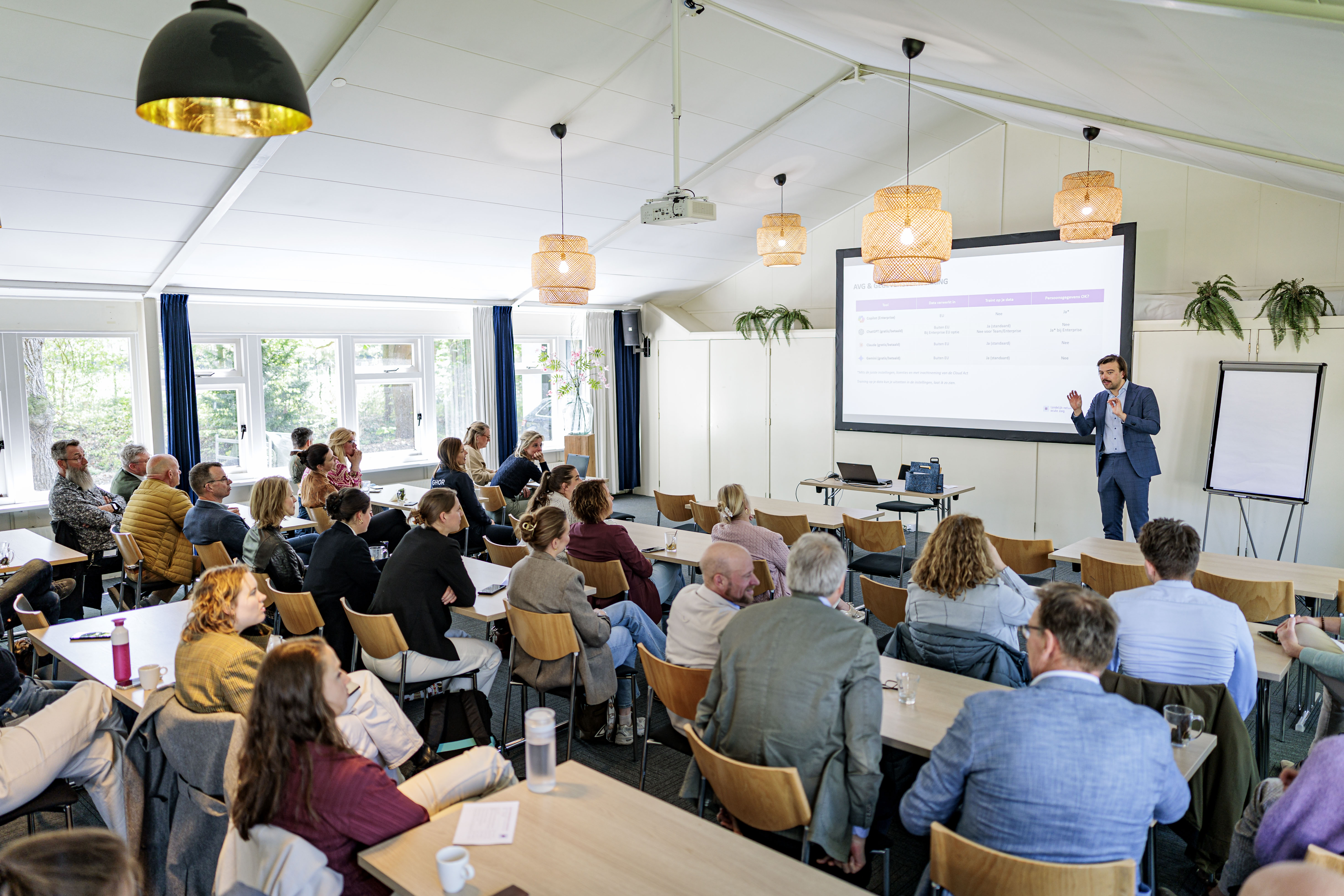
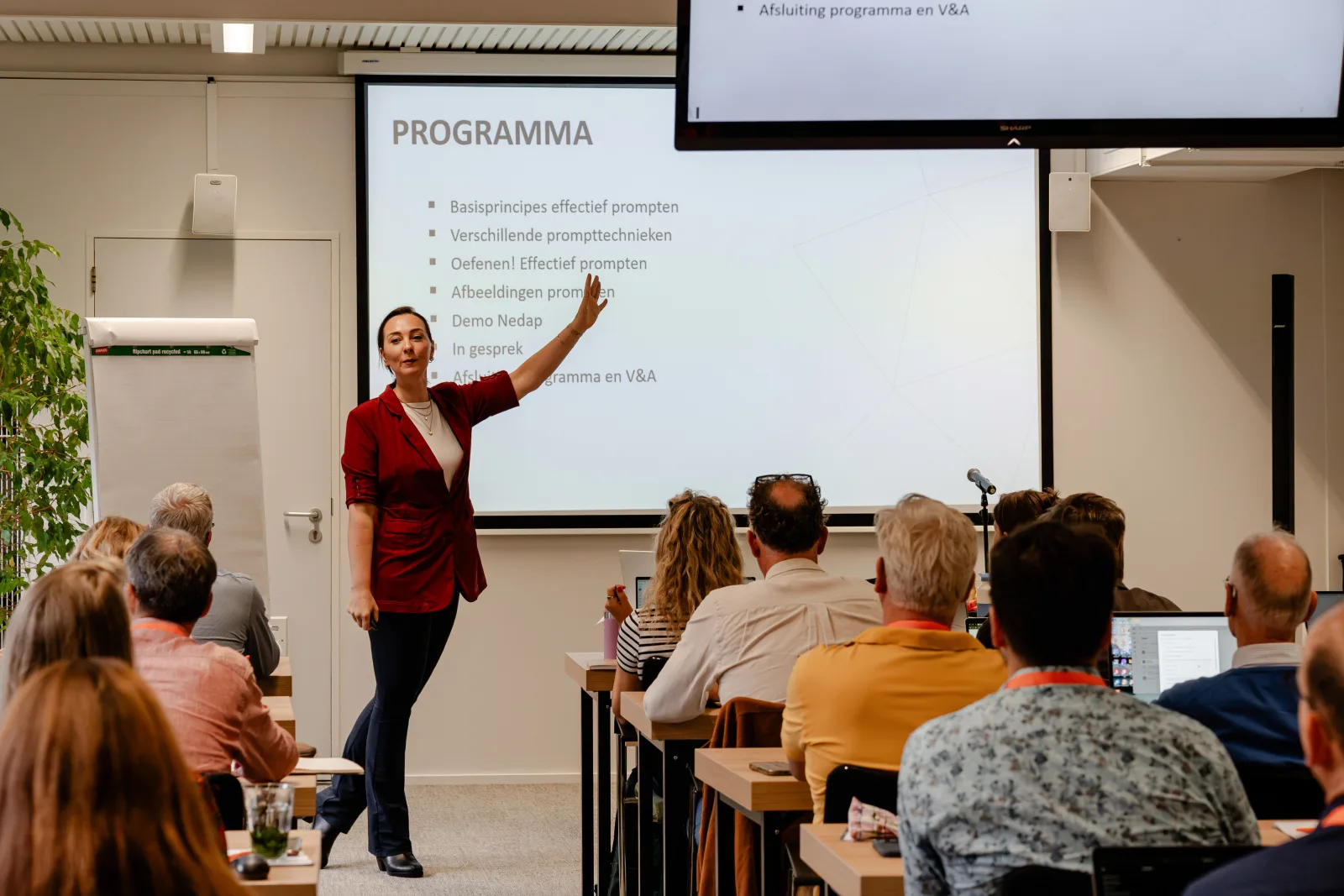
Training in action
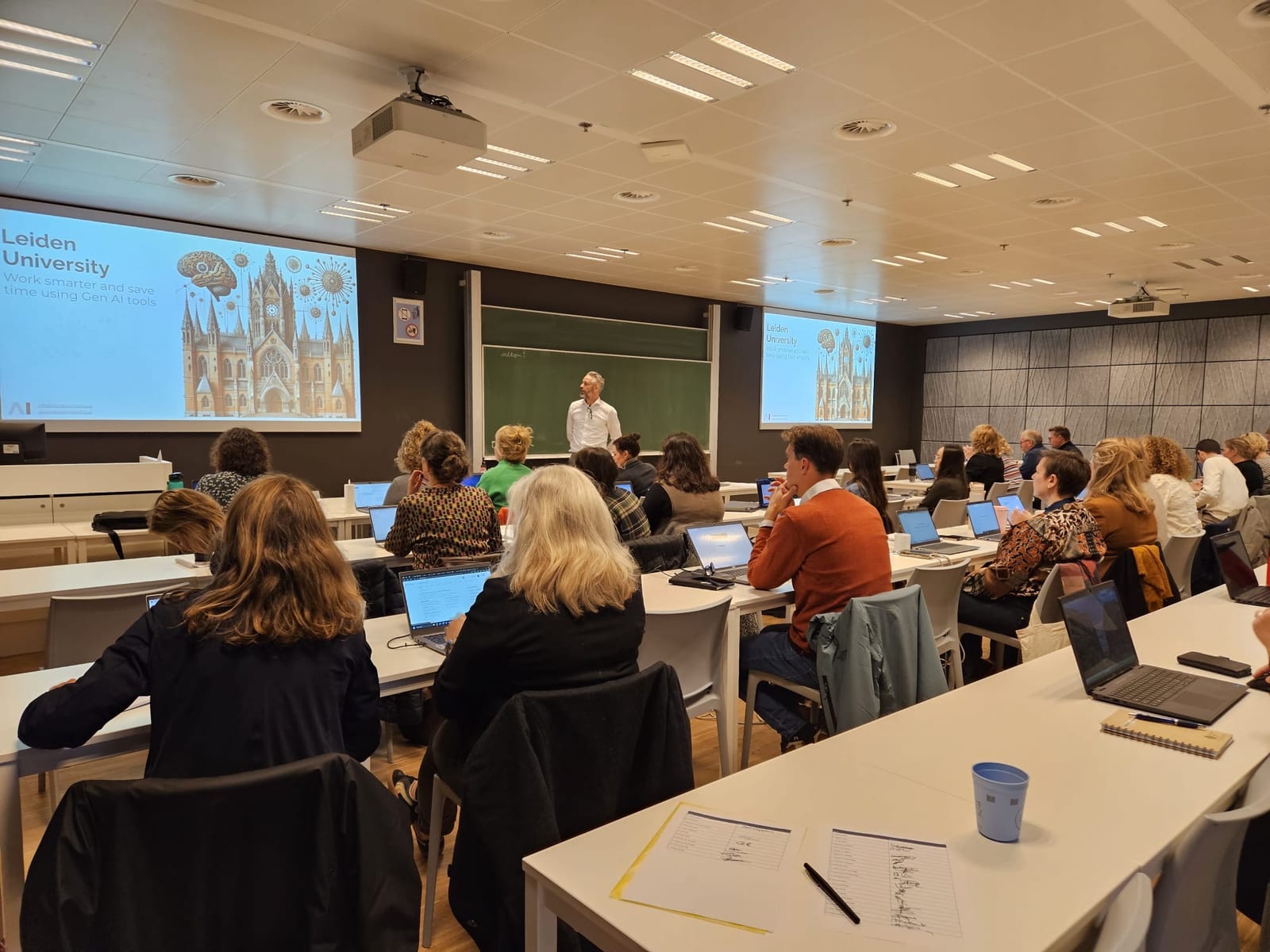
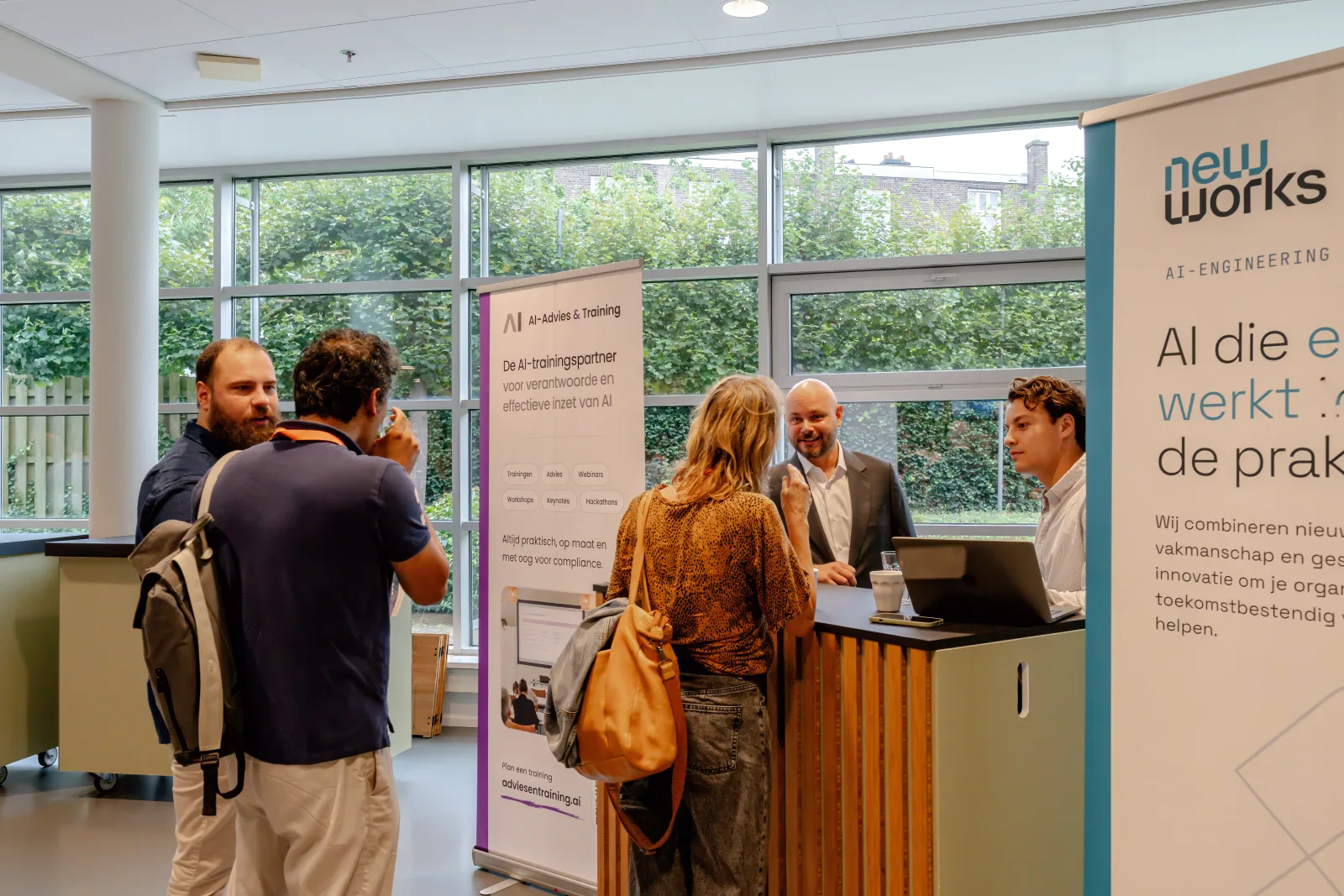
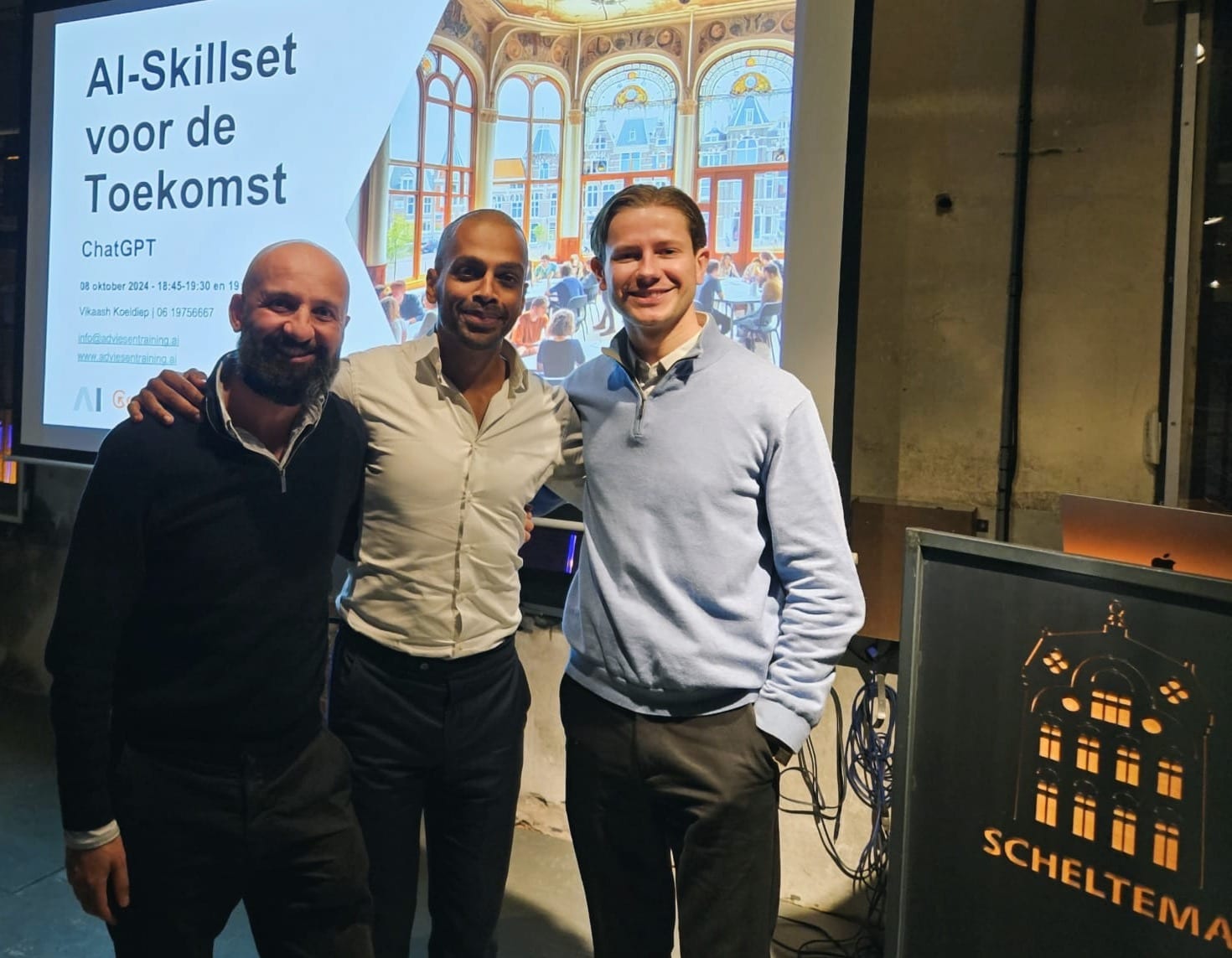
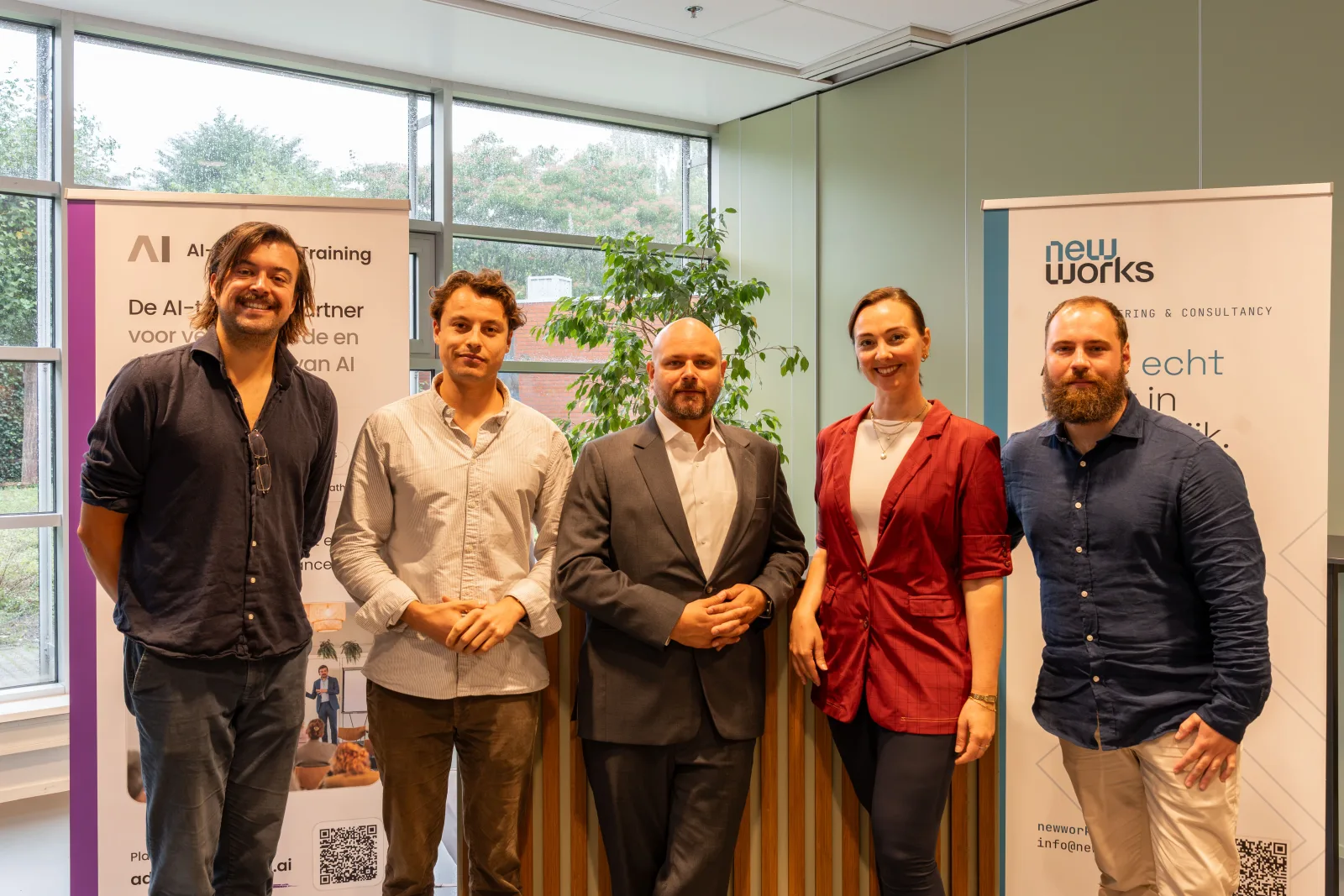
From in-house workshops to keynotes for hundreds of participants
Frequently asked questions
Can a healthcare provider use AI with patient data?
Only with care. Never enter identifiable patient data into a public AI tool. In the training you learn to work safely within privacy rules (GDPR).
Which AI tool is best for healthcare?
ChatGPT and Microsoft Copilot cover most of the work. If you work in Microsoft 365, Copilot is the obvious choice. We help you choose what fits your organisation.
Does AI use in healthcare comply with the EU AI Act?
Since 2025 the AI Act has set requirements for AI literacy. Our training helps you meet them. For full compliance, there is our EU AI Act compliance consulting.
How many participants can take part?
A group usually has 6 to 30 participants. With more than 15 participants we bring two trainers, so everyone gets enough personal attention.
Do I need any prior knowledge?
No. The training requires no technical background. We do ask you to create a ChatGPT account before or during the training.
Ready for this training?
Request an in-house training, or start with a no-obligation introductory call.
Prefer email? secretariaat@adviesentraining.ai