

AI training for crisis and emergency organisations
AI training for crisis organisations in the Benelux: use AI safely for exercises, scenarios, response plans, SITREPs and crisis communication, within GDPR.
- Format
- Half day (4 hours) or Full day (8 hours)
- Level
- Foundation to advanced
- Audience
- Training and exercise staff, information managers, communications professionals, medical emergency coordination (GHOR) and business continuity (BCM) officers
- Location
- In-house or online
- Language
- English (Dutch on request)
Trusted by, among others



Learn to use generative AI safely in crisis management: for training and exercises, scenarios, response plans, SITREPs and crisis communication. Hands-on, in-house or online, no technical background needed. This is our Advanced training, tailored to crisis organisations and the Dutch safety regions.
At AI Advice & Training we run hands-on, in-house AI training for crisis organisations. We train professionals from the Dutch safety regions (veiligheidsregio’s), regional medical emergency coordination (GHOR), acute care, water authorities and organisations with a business continuity (BCM) function. We offer the same format tailored to municipalities and government, policy makers and the public sector and healthcare.
Your trainers: Bram Kreuger and Diederik Stolk.
AI in crisis management, from exercises to aftermath
You practise with real cases from your own practice. Think of an exercise scenario that has to be ready tomorrow, or a stream of incoming reports you need to turn into a clear situation report fast. That way you see straight away what can be done safely today and what cannot yet.
Crisis organisations work under time pressure, with sensitive information and high demands on reliability. We start with what can already be done safely, are honest about what cannot yet, and keep connecting it to your own work.
By default we work with ChatGPT and Microsoft Copilot. On request we also look at Claude, Gemini or Perplexity. We tailor the content to the roles in the group: a session for training and exercise staff looks different from one for heads of communications.
Working safely with sensitive crisis information
In crisis management, care weighs heavily. Hallucination is the biggest risk: AI sometimes gets the interpretation wrong, so human verification is always needed. Data from the national crisis management system (LCMS), personal data and information for officials do not belong in public chat services. For sensitive work, choose a secure environment such as Microsoft Copilot in M365 or Azure AI. Do not use the public versions of ChatGPT or Claude.ai for this.
Deepfakes and disinformation are a growing crisis risk. Fake images and fake messages spread fast through social media and messaging apps; we show you how to recognise them and factor them into your crisis communication. We translate the requirements of the EU AI Act and GDPR to your own situation. See also our EU AI Act compliance consulting and the background in AI in crisis management. Want to introduce AI more broadly than training alone? See our AI consulting for organisations.
Part of the learning path
All our programmes can be taken on their own or as a learning path. This advanced training builds on the foundation of AI literacy. Want to embed AI structurally in the way you work? See AI Way of Working. A fully tailored programme is also possible; see custom AI training.
Good to know
We tailor the cases to your risk profile and exercise programme. Share response plans or earlier evaluations beforehand and we will build them into the cases. Ask participants to create a ChatGPT or Copilot account beforehand. For operational use, we prefer to work in your own secure environment.
Training credits. The training may qualify for professional development or accreditation points. Get in touch; we will gladly help you look into registration and options.
What you will learn
- You use generative AI safely for training and exercises, scenarios, response plans and crisis communication, always checking for accuracy.
- You write effective, reusable prompts with our five-step model.
- You know which information you can and cannot enter in an AI tool, with GDPR and sensitive data in mind.
- You recognise hallucination, deepfakes and disinformation as a crisis risk.
- You understand the difference between preparation and live operations, and the conditions that apply to each.
How the training is structured
Indicative structure. We adapt the schedule to a half day (4 hours) or full day (8 hours), in-house or online
-
Welcome and AI basics
30 minWhat can generative AI do, and what can't it?
- How ChatGPT and Copilot work
- Your crisis context and the roles in the group
- Where AI is strong and where it is not
-
Effective prompting
45 minThe five-step model in practice
- Persona, Task, Context, Criteria, Output
- Reusable prompts for recurring work
- Assessing output critically for accuracy
-
AI in preparation (training and exercises)
60 minThe biggest immediate gain
- Generating scenarios and injects
- Drafting and sharpening response plans
- Speeding up training material, knowledge tests and evaluations
-
AI in live operations
45 minWhat is possible now, and what are the requirements?
- Structuring and summarising SITREPs
- Speeding up crisis communication
- Scenario thinking ahead and in the aftermath
-
Safe use, governance and risks
45 minReliability is not an afterthought
- Recognising hallucination
- Which information you do and don't enter
- Public tools versus secure environments
- EU AI Act and GDPR
-
Applying it to your own work
35 minYour own cases and next steps
- Working out your own use cases
- Building a personal prompt set
- Next steps for your organisation
Where AI helps
Scenarios and injects for exercises
Generate realistic scenarios and injects with variation in location, timing and complicating factors, in a fixed format.
Response plans and training material
Draft and sharpen response plans, and develop training material, knowledge tests and evaluations faster from your own source material.
Structuring and summarising SITREPs
Organise incoming reports into a clear situation report, always with human verification.
Faster crisis communication
From the operational picture to press releases, public information and briefings for officials, in plain language.
Evaluation and aftermath
Summarise logbooks and evaluation forms and prepare reports for the executive.
Resilience against disinformation
Recognise deepfakes and disinformation that spread fast through social media and messaging apps during a crisis.
Training tailored to your organisation
We are happy to build a programme that fits your practice, team and learning goals. Fill in the form and we will schedule an introductory call within one working day.
-
Fully tailored
Content and examples matched to your sector, team and way of working.
-
At your offices or online
4 or 8 hours, groups of up to 20 participants, in English or Dutch. Anywhere in the Benelux.
-
Proof of attendance
Attendance is registered; for legal training, CPD points may be possible.
Our method: the five-step prompting model
In every training you work with our five-step model. It helps you write prompts that are reliable, repeatable and directly usable in your own work.
- P
Persona
What role and tone do you give the AI?
- T
Task
What task? Concrete and clearly scoped.
- C
Context
What background and sources are relevant?
- C
Criteria
What must the result meet?
- O
Output
In what form do you want the answer back?
What you receive
After this training: badge and certificate
You complete this training with the Awareness Badge. Want your AI literacy formally and independently recognised as well? Then you take an exam for the accredited certificate of the Stichting ter bevordering van AI-Geletterdheid (Foundation for the Promotion of AI Literacy).
- Awareness Badge included
- Prepares for SAIG-Practitioner
Awareness Badge
Every participant receives the digital Awareness Badge afterwards. No exam needed.
Official certificate
Have your knowledge tested at Basic, Practitioner or Advanced level. Administered independently on the assessment platform of the Stichting ter bevordering van AI-Geletterdheid.
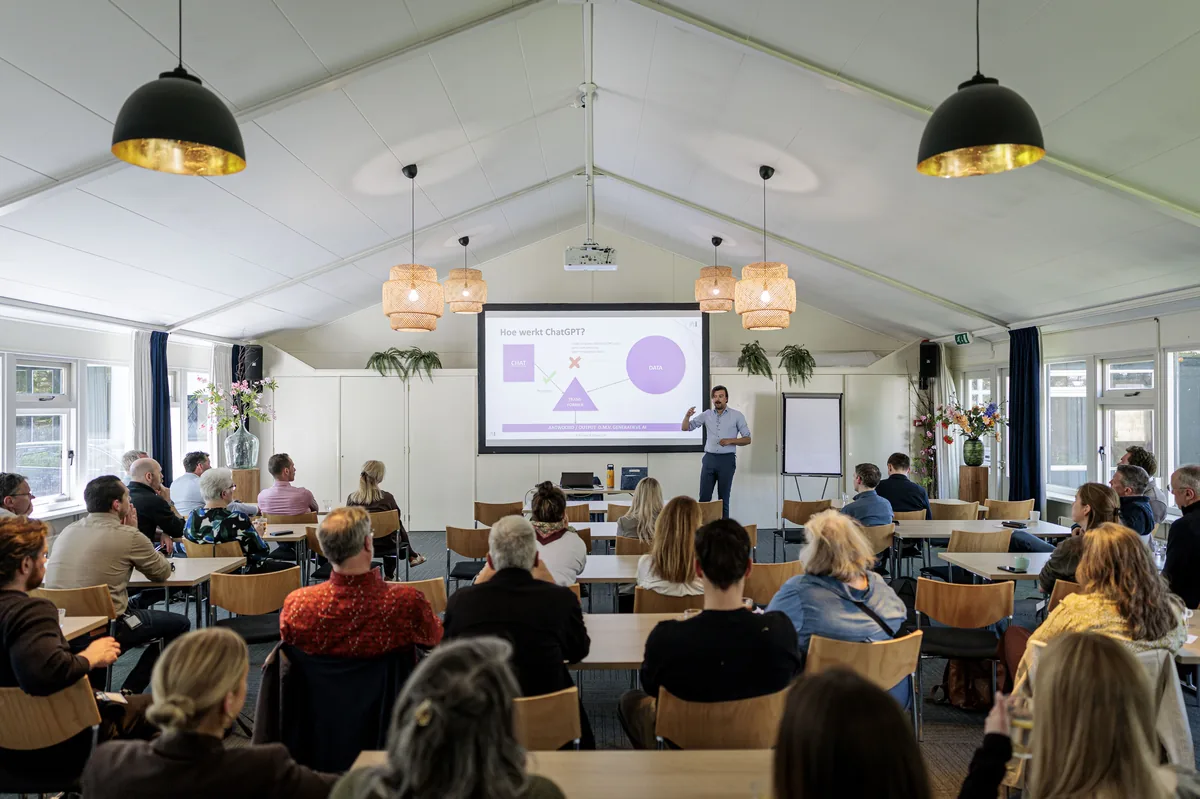
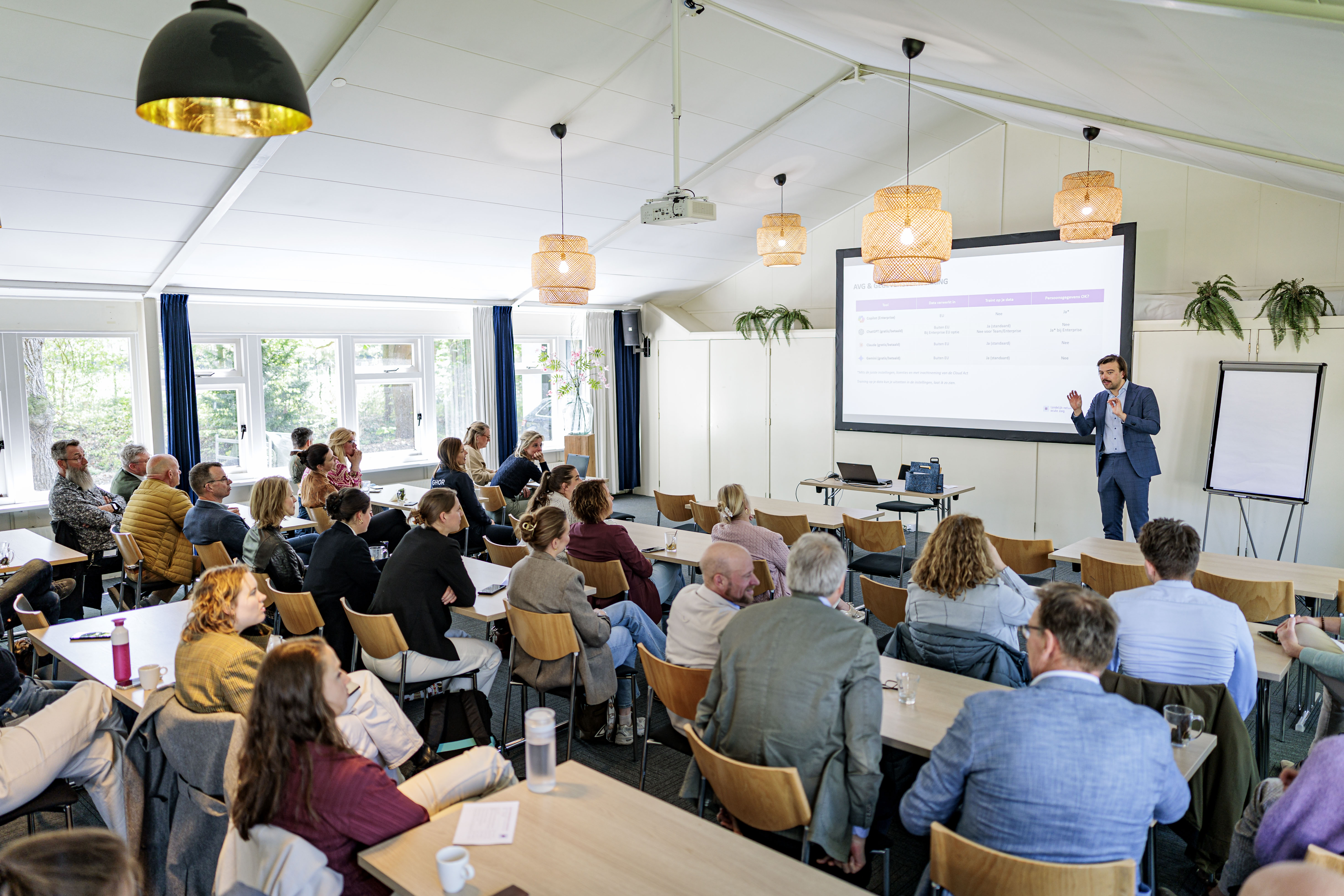
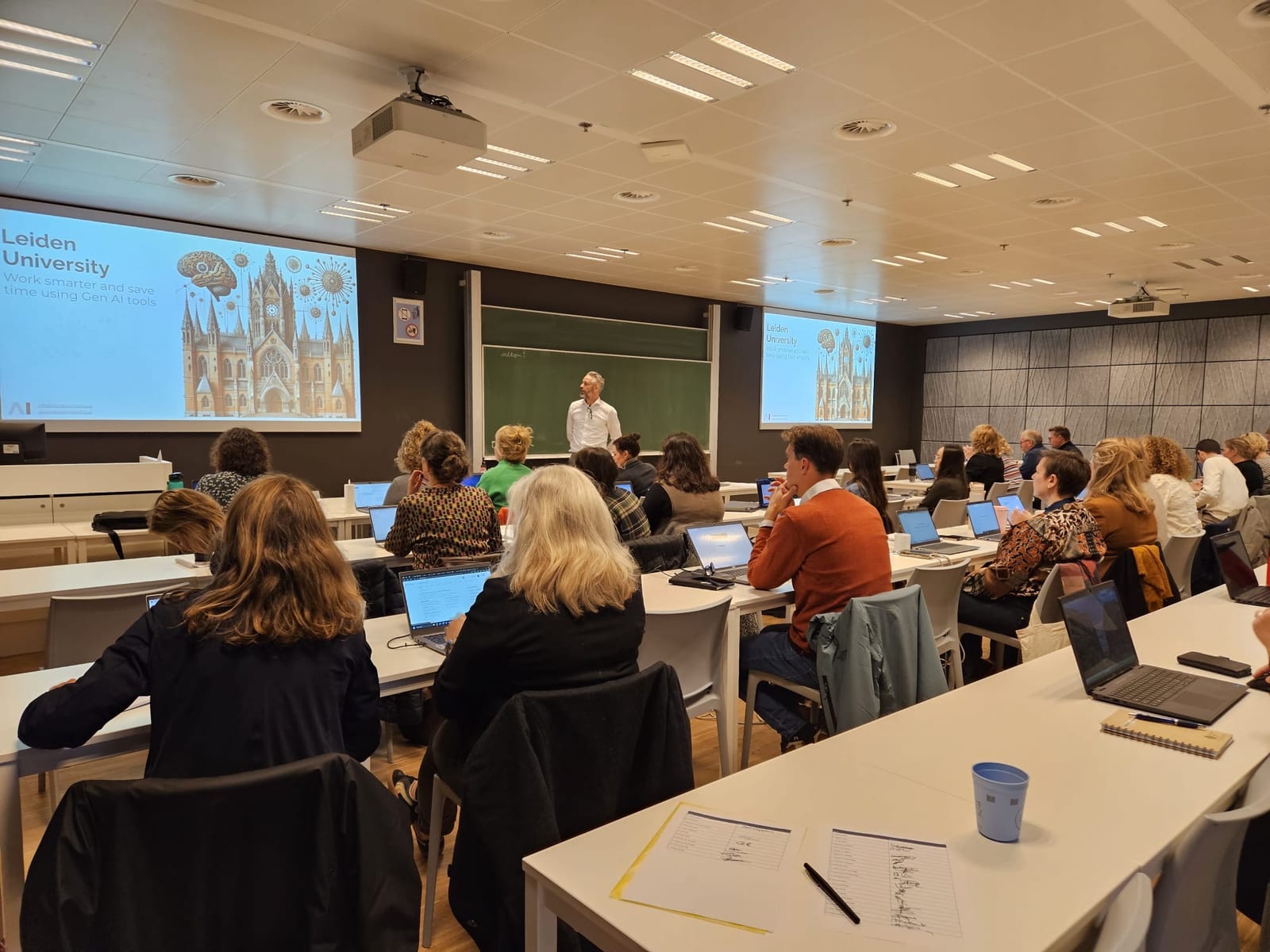
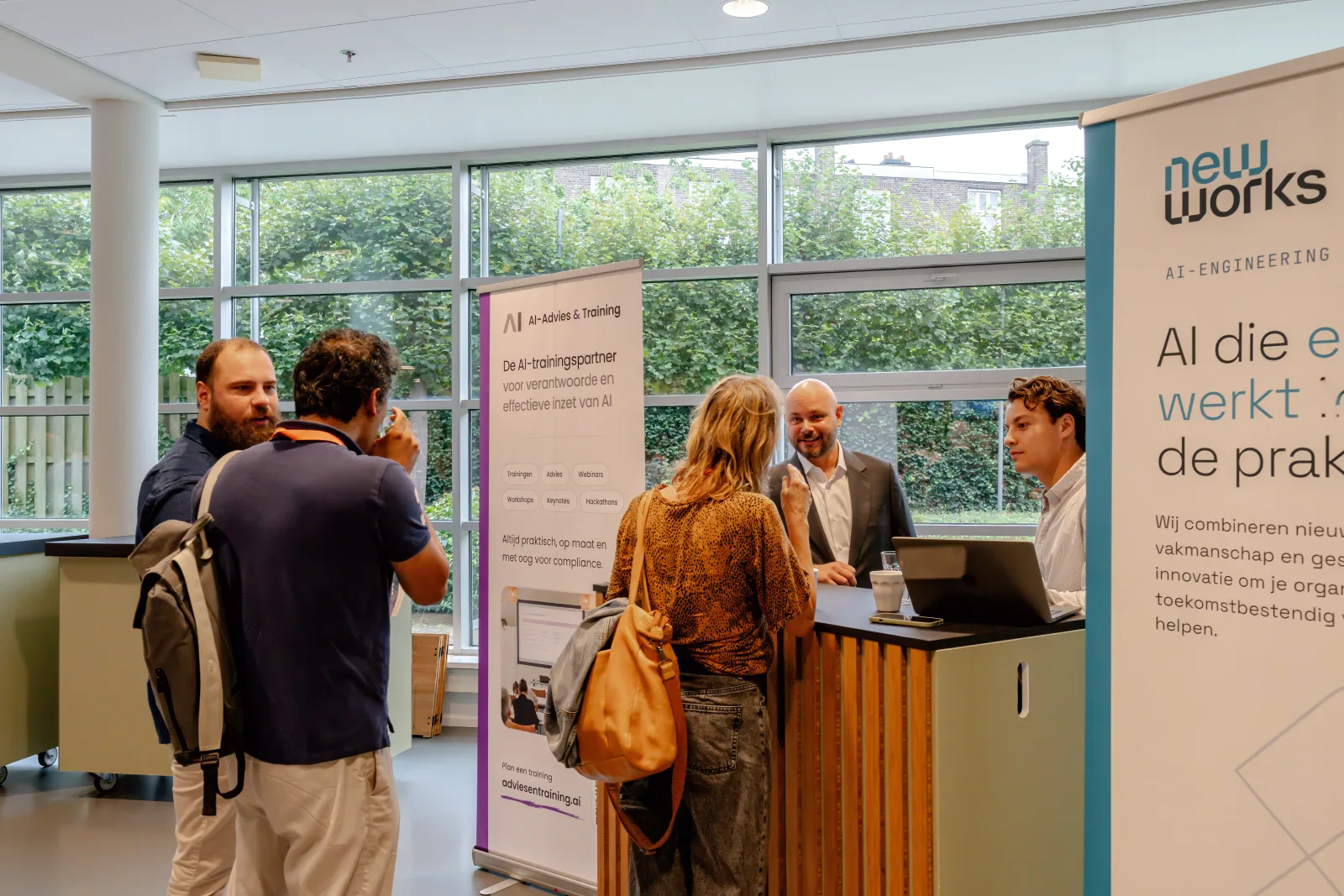
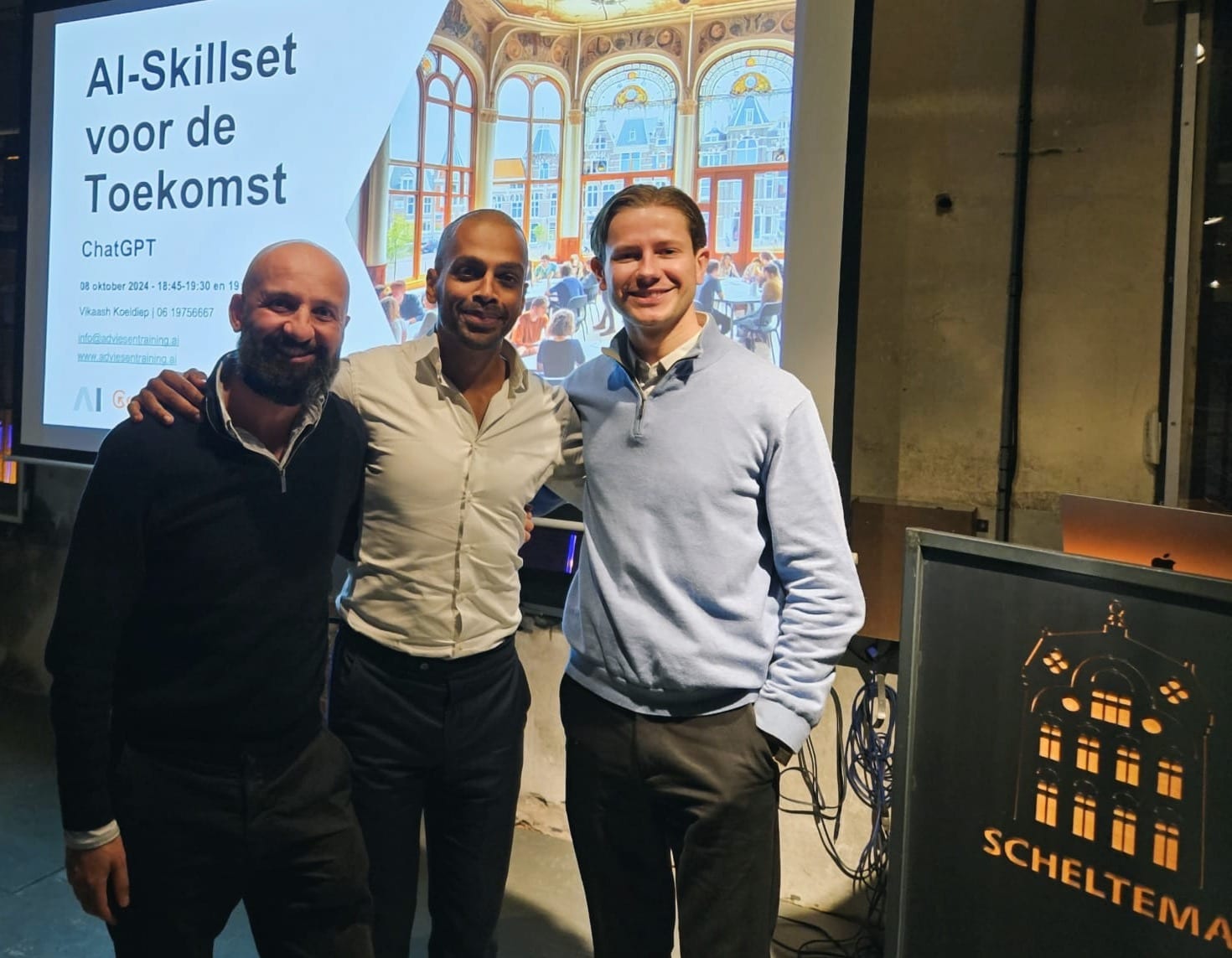
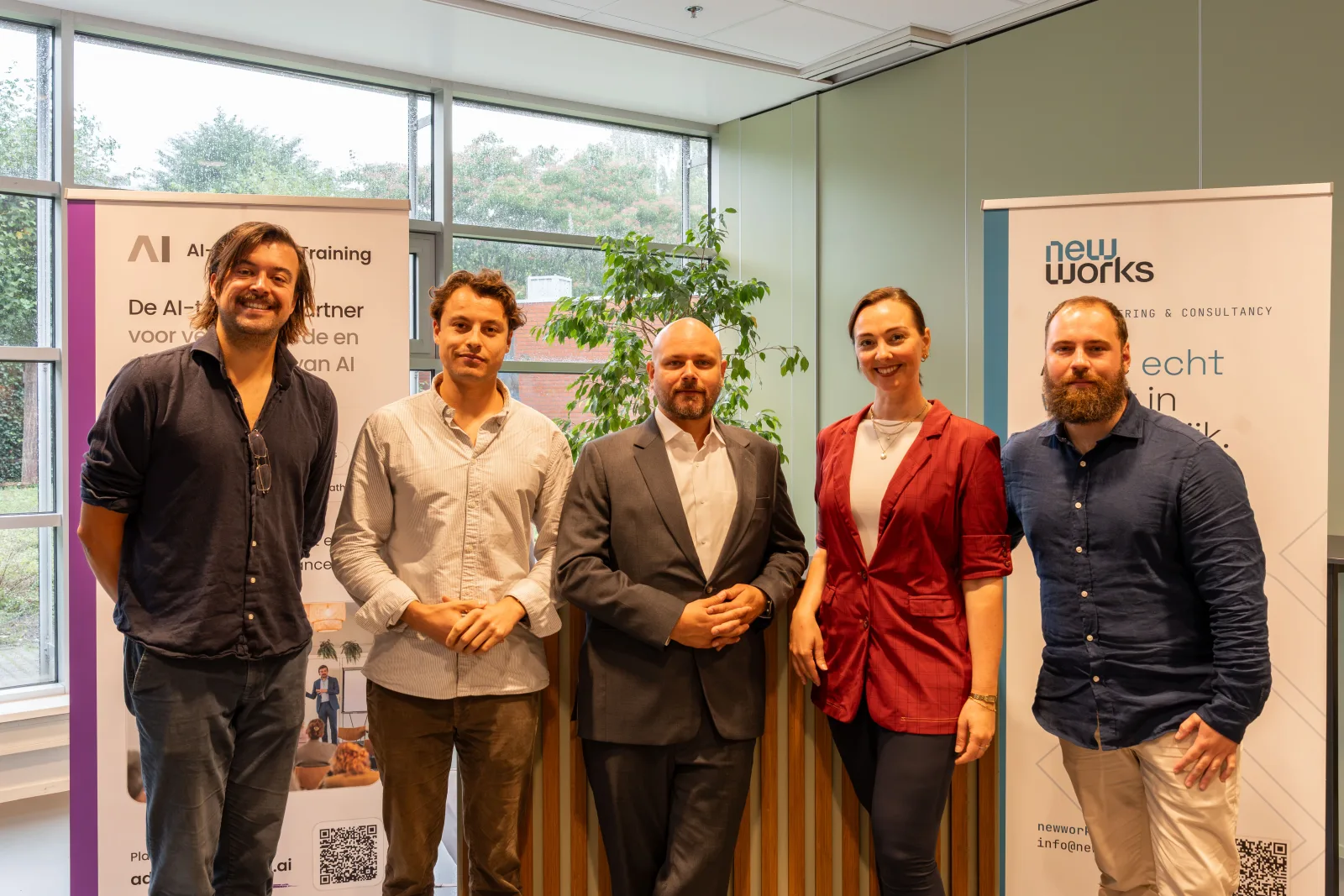
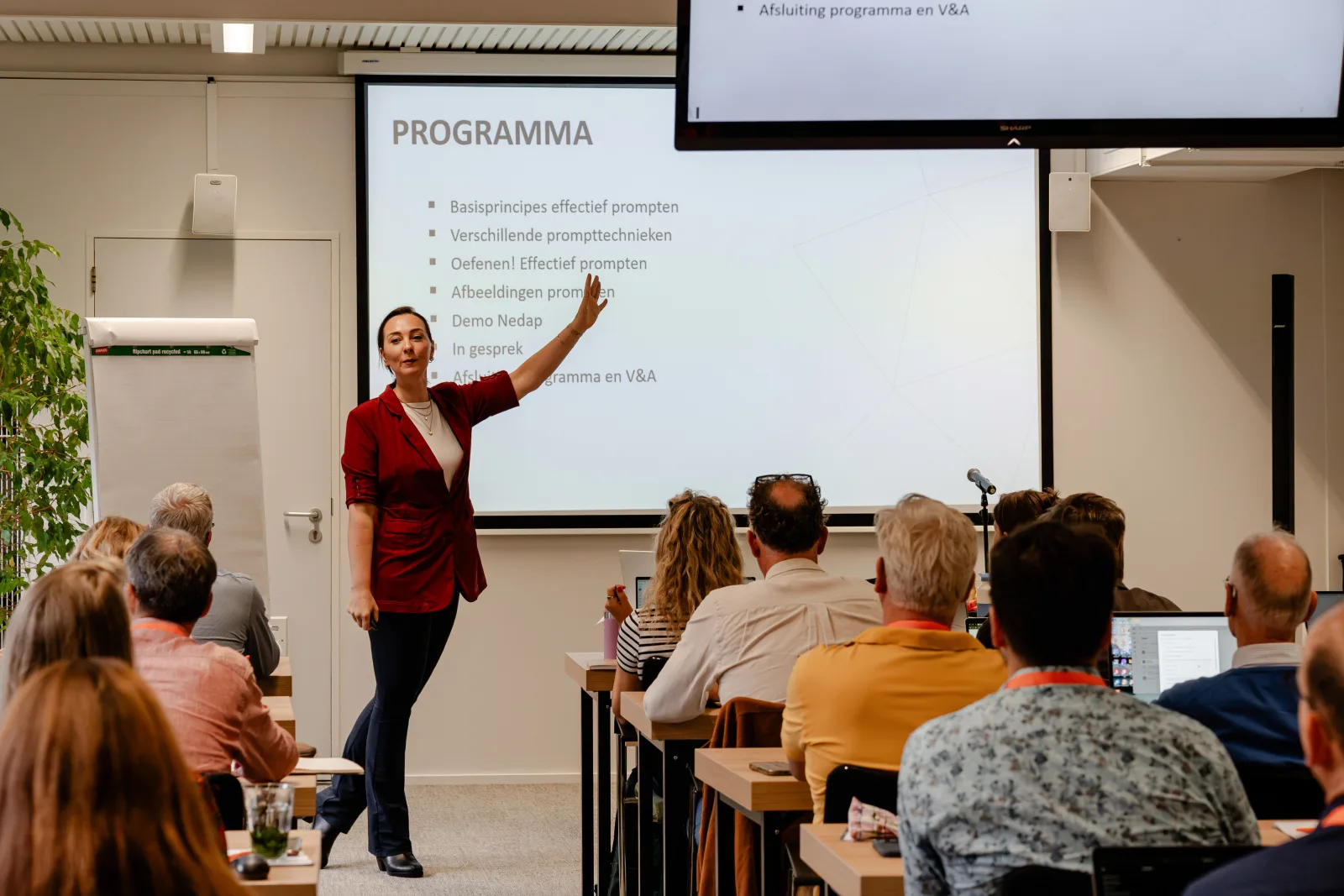
Training in action
From in-house workshops to keynotes for hundreds of participants
Frequently asked questions
Can AI be used during a real crisis?
That depends heavily on the application and the conditions. In preparation (training and exercises) the risk is manageable and the gain immediate. Live operational use has higher requirements: source references, uncertainty marking, human verification and a secure environment that complies with GDPR and data processing agreements. The training covers exactly this distinction.
Which AI tool suits safety regions and emergency services best?
That depends on your infrastructure. Microsoft Copilot in a secure M365 environment is often the most logical choice for organisations already in the Microsoft ecosystem. ChatGPT (Enterprise), Claude and Gemini each have different strengths. We help you choose what fits your organisation. Free public versions are fine for practice and non-sensitive tasks, but not for operational or personal information.
What about staff who work for more than one organisation?
This is an underestimated issue. Many crisis officers have a main employer and also an on-call duty or secondary role at another organisation. In the training we look at how to write policy that follows a person's role, not just their employment contract.
Is the training also suitable for executives and managers?
Yes, if the content is adapted for them. For executives and management we also offer keynotes and shorter inspiration sessions (60-90 min) focused on urgency, opportunities and risks at organisational level. Ask about the options.
How many participants can take part?
A group usually has 6 to 30 participants. With more than 15 participants we bring two trainers, so everyone gets enough personal attention.
Do I need any prior knowledge?
No. The training requires no technical background. Anyone working in crisis management can take part; experienced users go deeper faster.
Ready for this training?
Request an in-house training, or start with a no-obligation introductory call.
Prefer email? secretariaat@adviesentraining.ai