
AI Way of Working: team workflows rebuilt with AI
AI Way of Working: your team rebuilds real work processes with AI and sets repeatable standards. Two sessions, in-house in the Benelux or online.
- Format
- Two half days or Full day + half day
- Level
- Applied
- Audience
- Existing teams that want to embed AI in the way they work
- Location
- In-house or online
- Language
- English, Dutch or German
Trusted by, among others














AI Way of Working is the applied layer of the learning path. The team maps its own workflows, rebuilds one or two processes from start to finish with AI, and sets down standards. You leave the training with new skills and concrete work artefacts.
AI Way of Working: from understanding AI to team workflows
Your team works on real workflows, not on isolated exercises. The focus is not on individual tools, but on your team’s recurring processes. Together you choose a process and rebuild it with AI.
The aim is for your team to keep doing it afterwards. Participants learn to recognise, design and improve use cases themselves. For writing prompts you use our five-step model, so the result stays traceable and repeatable. That way AI use keeps growing after the training is over.
What your organisation needs in place beforehand
What you need depends on which tools you want to use. Think of licences and rolling out tools, data in good order, and secure access to data and systems. We help you work out what your situation requires and define that for each engagement.
Hands-on help with the rollout is agreed per engagement. Want to roll out AI more broadly across the organisation? Take a look at our AI consulting for organisations.
AI Way of Working as step 3 in the learning path
You can take every training on its own or as part of a learning path. AI Way of Working is step 3 and builds on AI literacy and the Advanced AI training. Those two lay the foundation and produce personal use cases. AI Way of Working turns that into shared, repeatable team workflows.
Want to have the best ideas built afterwards? You can, in an AI Hackathon.
In-house or online: what suits your team?
The training is about building together, so the format matters. In-house, your team sits together in one room. Switching between the session and your own work is often quicker that way.
Online works well for teams spread across several locations, such as offices in Amsterdam, Brussels and Luxembourg, with short blocks and shared screens. Both formats deliver the same outcomes.
What you will learn
- Your team has several AI-supported workflow prototypes to develop further.
- Your participants identify, design and improve AI use cases themselves.
- Each role gets its own custom instruction sets and shared standards, so workflows stay repeatable.
- Your team assesses output critically, spots hallucinations and iterates until the result is reliable.
- Your team leaves with a prioritised list of use cases and an adoption plan with owners and milestones.
How the training is structured
Two sessions at least two weeks apart, in-house or online
-
Session 1: mapping workflows
Half day or full dayIdentifying and prioritising use cases, and rebuilding the first workflow
- Mapping the team's recurring processes
- Prioritising use cases on impact and effort
- Advanced prompting: reusable prompts and prompt chains
- Rebuilding the first workflow from start to finish with AI
-
In between: applying it to real work
2 weeksAt least two weeks to use the new workflow
- Applying the rebuilt workflow to ongoing work
- Collecting experiences and bottlenecks
- Noting ideas for a second workflow
-
Session 2: adjusting and embedding
Half daySecond workflow, standards and adoption plan
- Adjusting the first workflow based on practice
- Building a second workflow, possibly with light automation
- Setting down custom instructions and working standards per role
- Drawing up follow-up use cases and an adoption plan with owners and milestones
Where AI helps
Identifying use cases
Your team explores where AI really adds value in its own processes and prioritises on impact and effort.
Advanced prompting
Reusable prompts, structured context and prompt chains for recurring tasks, with checks on the output.
Workflow integration
You rebuild one or two real workflows from start to finish, with tools such as GitHub Copilot, Claude, ChatGPT and Deep Research.
Light automation
Prototypes with Custom GPTs, Copilot Agents, Claude Skills or scheduled tasks, without having to write code.
Setting standards
Custom instructions and working agreements, so workflows stay repeatable and transferable within the team.
Training tailored to your organisation
We are happy to build a programme that fits your practice, team and learning goals. Fill in the form and we will schedule an introductory call within one working day.
-
Fully tailored
Content and examples matched to your sector, team and way of working.
-
At your offices or online
4 or 8 hours, groups of up to 20 participants, in English or Dutch. Anywhere in the Benelux.
-
Proof of attendance
Attendance is registered; for legal training, CPD points may be possible.
Our method: the five-step prompting model
In every training you work with our five-step model. It helps you write prompts that are reliable, repeatable and directly usable in your own work.
- P
Persona
What role and tone do you give the AI?
- T
Task
What task? Concrete and clearly scoped.
- C
Context
What background and sources are relevant?
- C
Criteria
What must the result meet?
- O
Output
In what form do you want the answer back?
What you receive
After this training: badge and certificate
You complete this training with the Awareness Badge. Want your AI literacy formally and independently recognised as well? Then you take an exam for the accredited certificate of the Stichting ter bevordering van AI-Geletterdheid (Foundation for the Promotion of AI Literacy).
- Awareness Badge included
- Prepares for SAIG-Advanced
Awareness Badge
Every participant receives the digital Awareness Badge afterwards. No exam needed.
Official certificate
Have your knowledge tested at Basic, Practitioner or Advanced level. Administered independently on the assessment platform of the Stichting ter bevordering van AI-Geletterdheid.
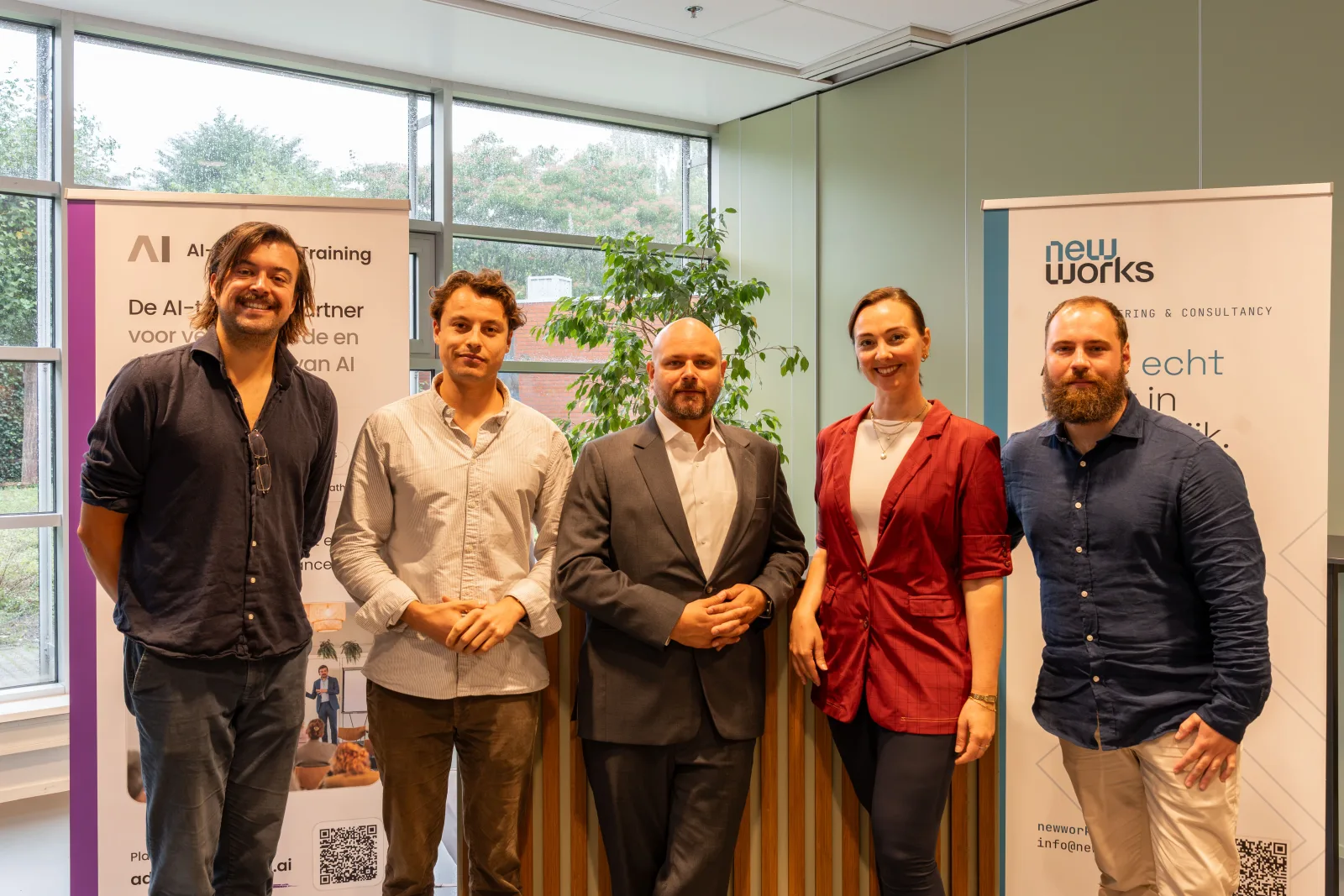
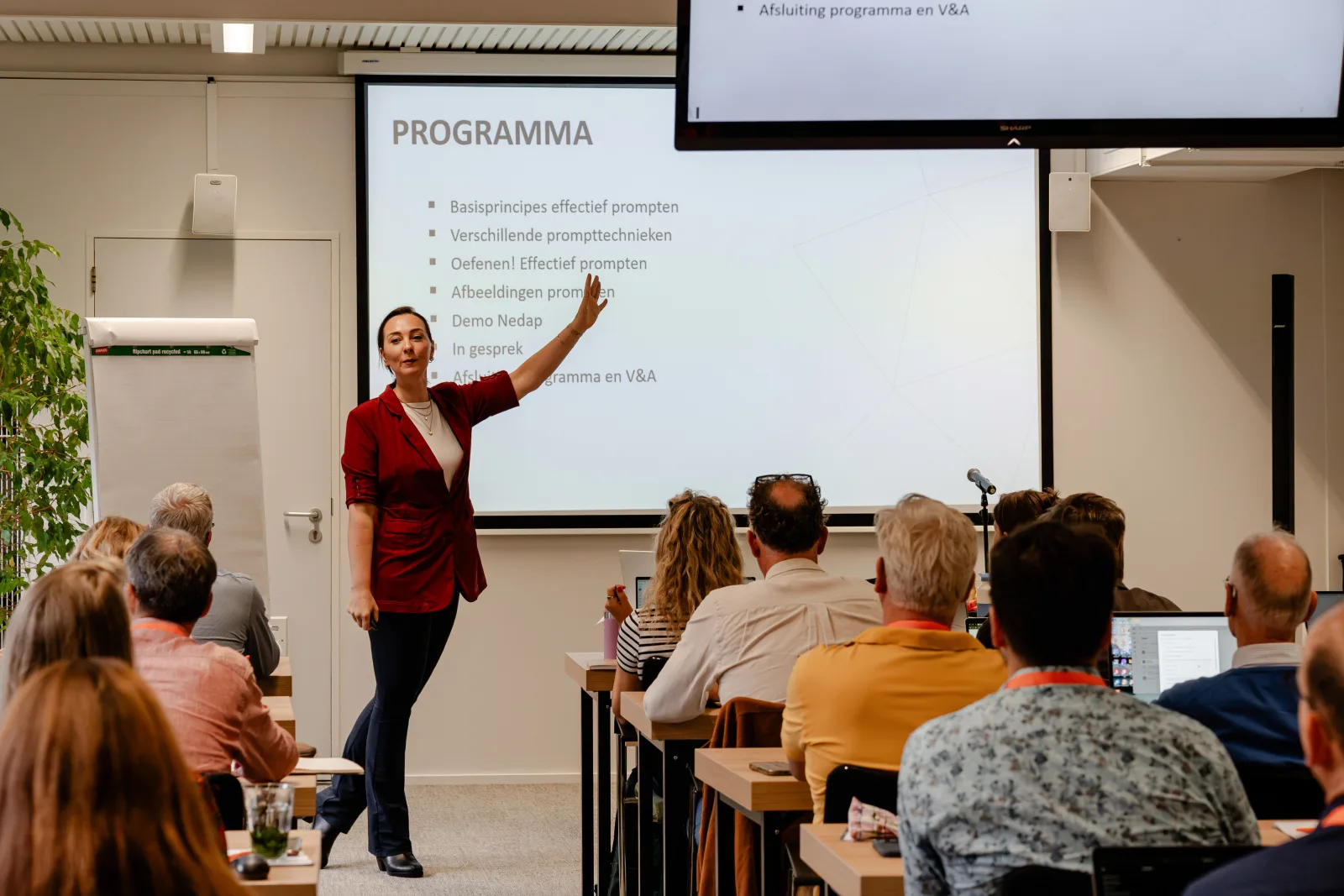
Training in action
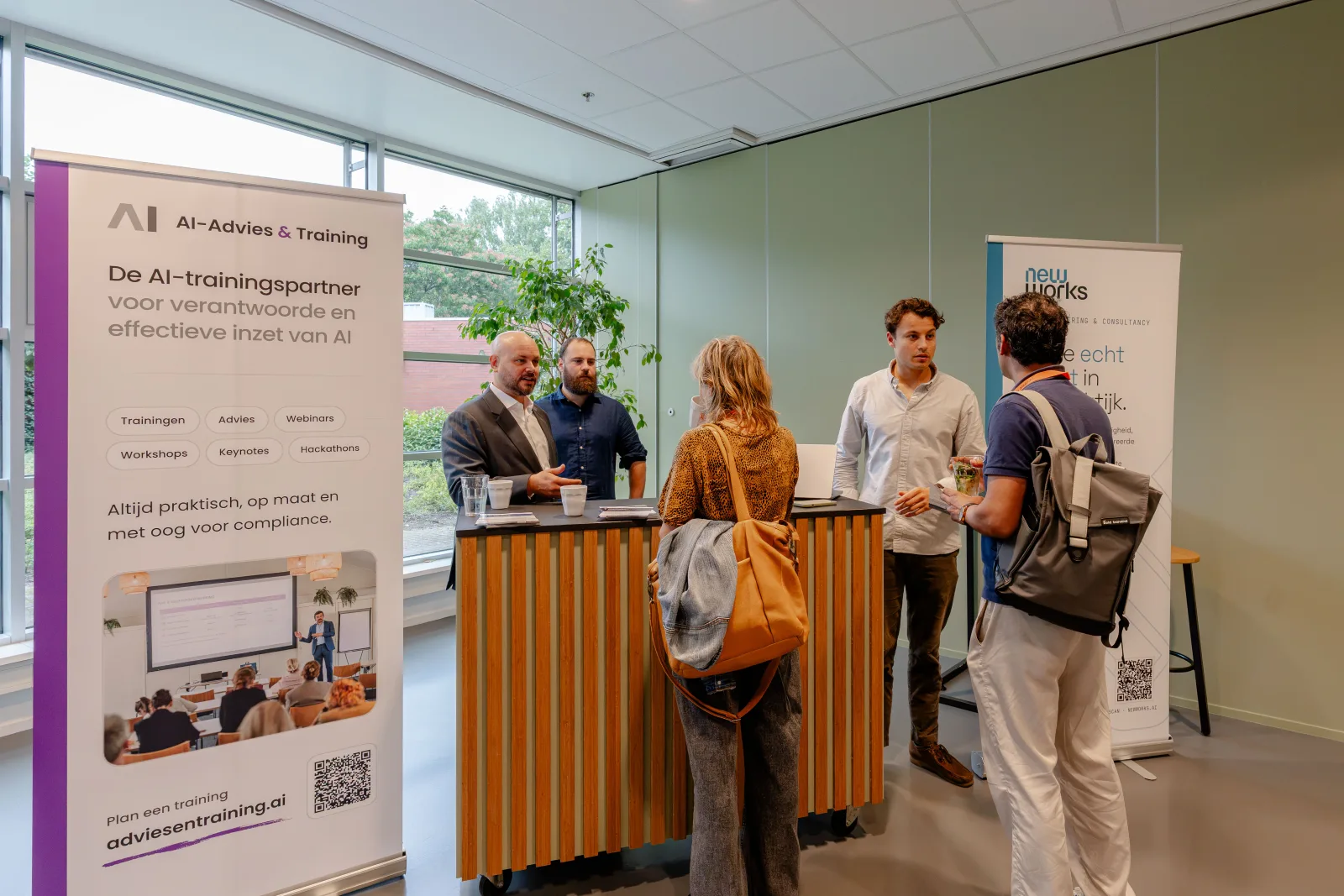
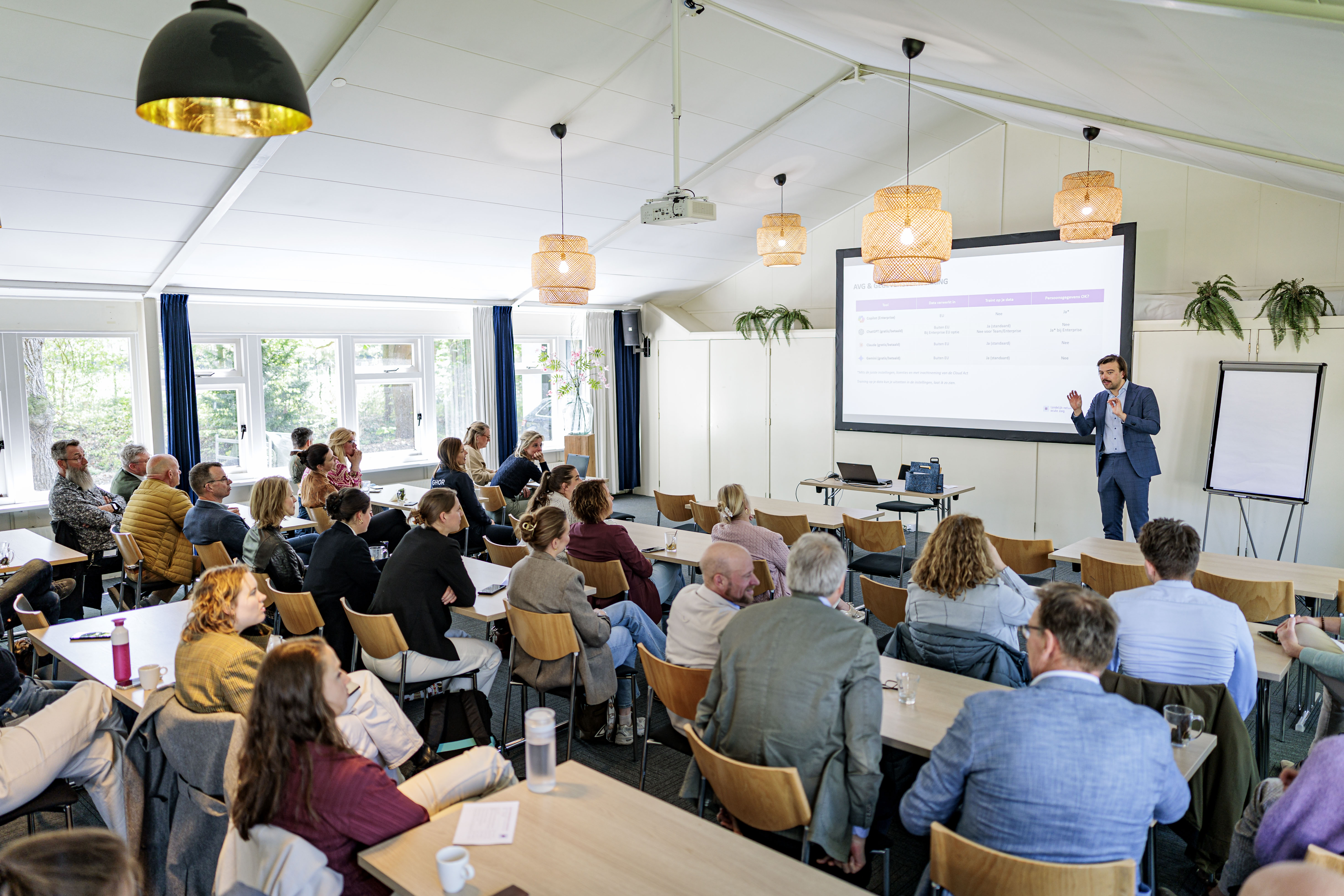
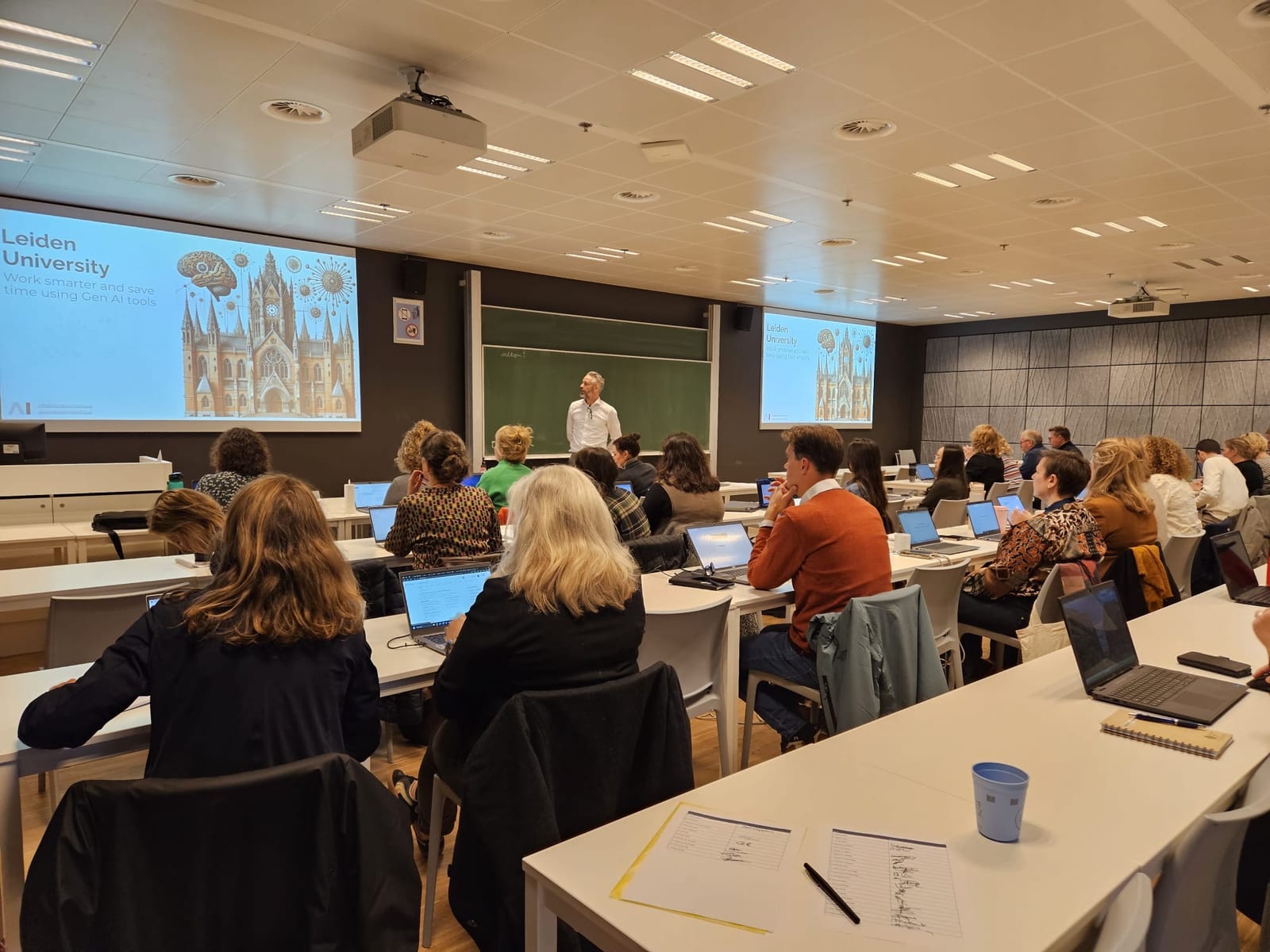
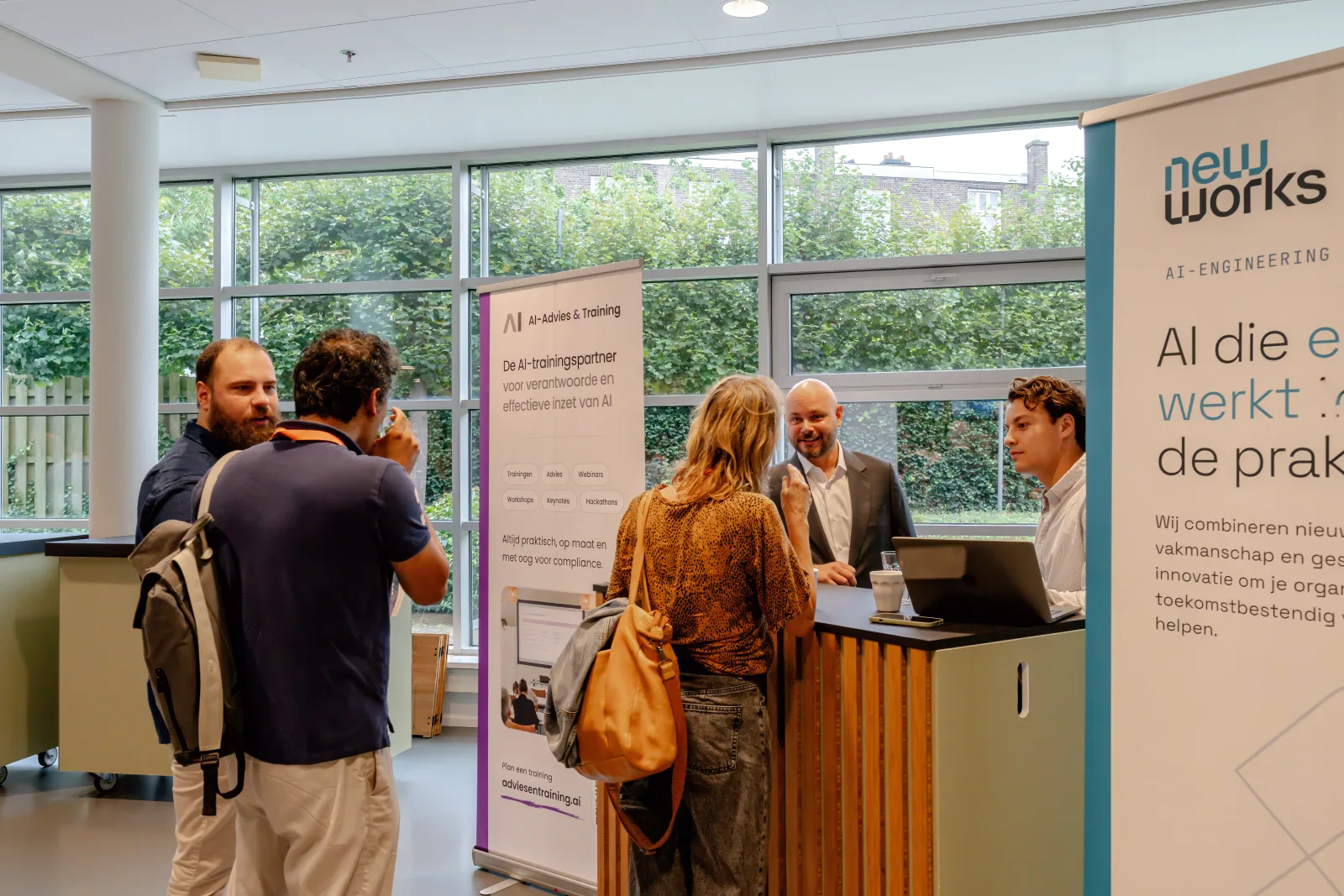
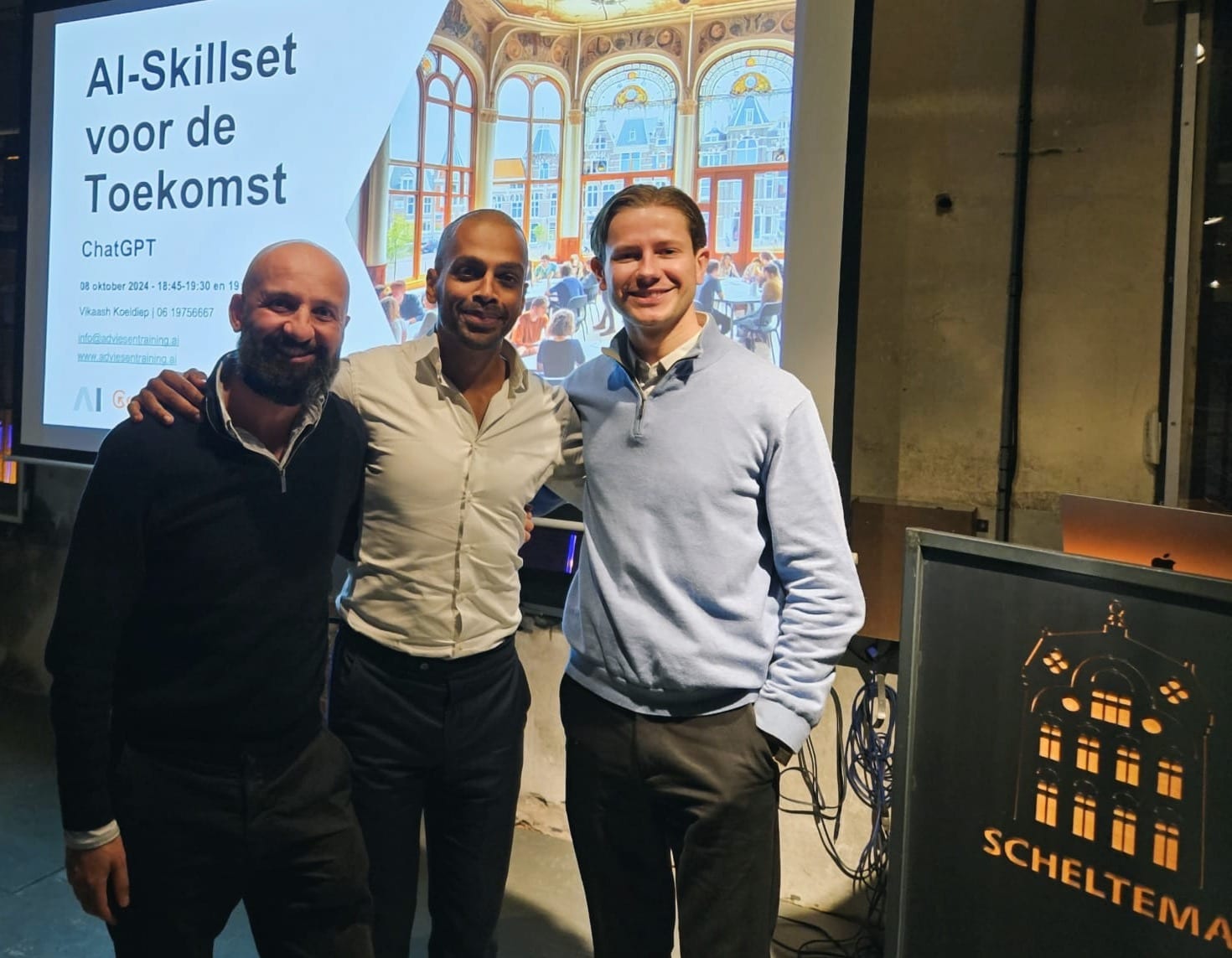
From in-house workshops to keynotes for hundreds of participants
Frequently asked questions
Why two sessions?
There are at least two weeks between the sessions. That way your team applies the new workflows to real work before we adjust in the second session. That makes the result last.
What do we need in place beforehand?
That depends on which tools you want to use. Think of licences, data in good order, tool integration and secure access to data and systems. We help you work that out.
Is the first session a half day or a full day?
That depends on which tools you use and on your starting level. Set-ups with several tools take more time. A team with a solid foundation can start with a half day.
Who is this suitable for?
For an existing team that works on its own processes together, ideally after AI literacy or the Advanced AI training. This training builds on that foundation.
How many participants can take part?
A group usually has 6 to 30 participants. With more than 15 participants we bring two trainers, so every team member gets enough personal attention.
Ready for this training?
Request an in-house training, or start with a no-obligation introductory call.
Prefer email? secretariaat@adviesentraining.ai